
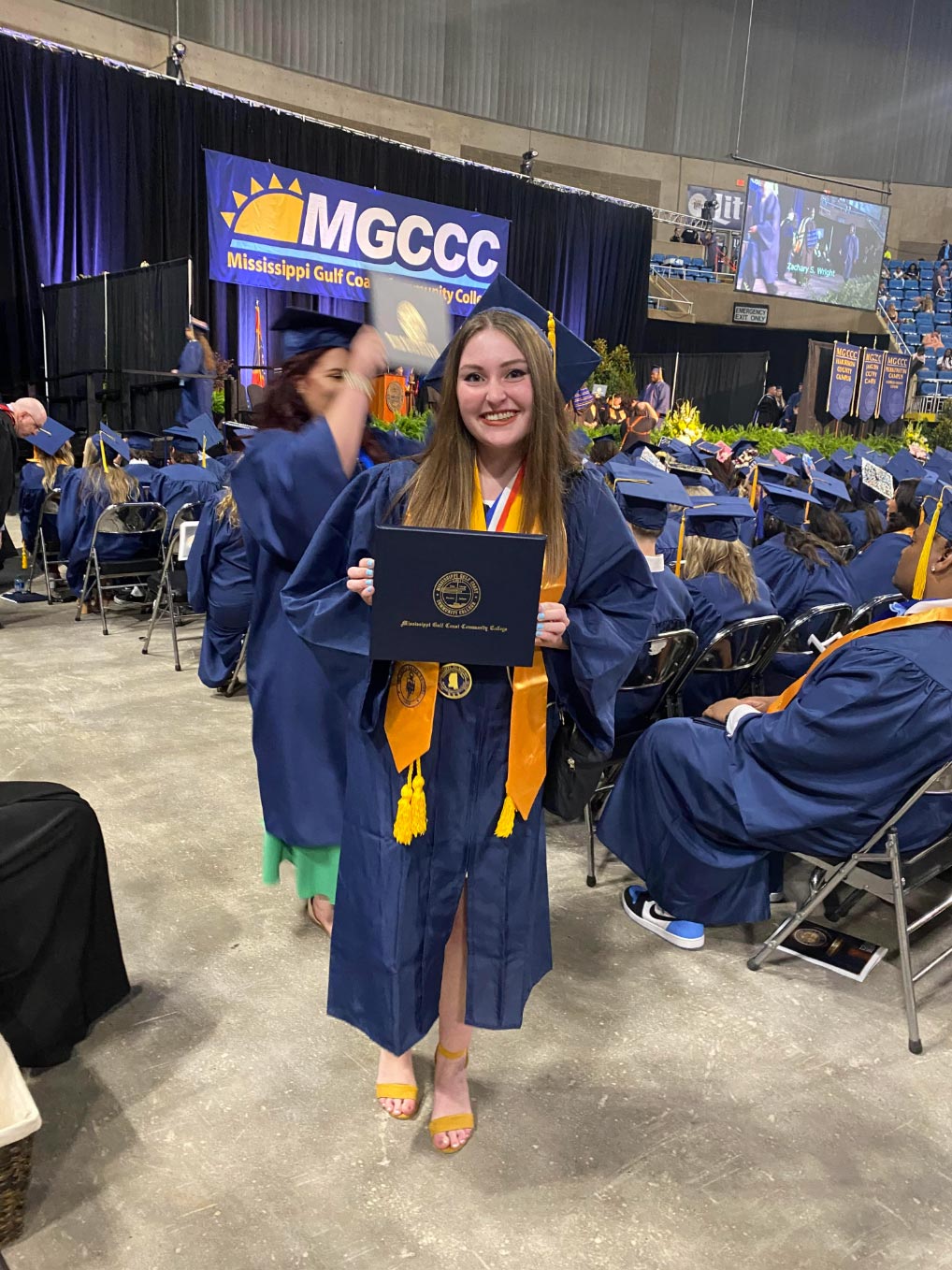
Maddie is a college student who developed severe gastrointestinal and nutritional complications at 16, leading to rapid health decline, repeated hospitalizations, and eventual reliance on a feeding tube. Despite hardships along the way, Maddie is graduating with honors from MSU and preparing for a Master’s program at LSU. Read her full story for insight into navigating life in college with a feeding tube, plus advice to fellow Tubies who are starting new chapters in their lives.
At LumaCleanCares, we are constantly inspired by stories of perseverance and innovation within the healthcare community. Stories like Maddie’s not only move us; they help us uncover critical gaps in patient care and drive the development of innovative medical solutions.
Meet Maddie, a senior at Mississippi State University preparing to begin a Master’s in Higher Education Administration at Louisiana State University. Her journey with chronic illness began long before college, but everything shifted dramatically at age 16 when her health declined rapidly and she was thrust into a world of hospital stays, medical uncertainty, and life-saving nutritional support.
Today, Maddie has been living with a J-tube for nearly six years. What began as a fight for survival has become part of her everyday life—and a source of purpose, advocacy, and strength.
Maddie has dealt with stomach issues for as long as she can remember, but her health took a severe turn at 16. She quickly lost weight, dropping to 89 pounds, and began cycling through doctors and hospital admissions as her body struggled to maintain basic nutrition and hydration.
Despite repeated symptoms and medical emergencies, including malnutrition, low potassium, and dehydration, she often found herself not being believed. After multiple hospitalizations, she was placed on an NG tube, which she used for nine months while continuing to advocate for answers and better care.
Eventually, Maddie requested a J-tube to better support her long-term nutritional needs. Her doctor at the time refused, believing her symptoms were self-inflicted. Maddie continued to advocate for herself until she ultimately received the J-tube she needed.
Looking back, that moment of persistence became a turning point, not just in her medical care, but in her identity as an advocate for herself and others. Her J-tube has now supported her for nearly six years, giving her the stability to pursue her education and her goals.
For Maddie, college has been a balancing act between academic ambition and chronic illness management, but also a story of resilience.
Living with a feeding tube throughout college has taught her how to advocate for herself in environments that weren’t designed with students like her in mind. Between honors coursework, clubs, group projects, and unpredictable health fluctuations, she’s had to learn how to manage her energy, communicate clearly with professors, and navigate the unpredictability of chronic illness.
There are also the everyday moments that many students never have to think about, like a feeding pump beeping unexpectedly during a quiet lecture. While she’s grown accustomed to it over time, she admits those moments can still feel embarrassing.
At the same time, her tube has also given her freedom.
“My feeding tube has given me my life back, and it helps me have the stability I need to attend class, work, and stay involved in campus,” she said.
Perhaps most meaningfully, Maddie shares that her lived experience has shaped her future career path. She plans to work in higher education and student affairs so she can support students who feel different or overlooked.
Despite hardships along the way, Maddie is incredibly proud of what she has accomplished.
“I started at community college unsure if I could even handle school with my health issues, and I ended up thriving!” she said. “I am graduating with honors from MSU, attending LSU fully paid for, and I often do speaking events where I share my story. I’m proud that I have kept going, and that I've built a (semi) normal college life while managing gastroparesis and ulcerative colitis. I'm also so proud that I’ve been able to turn my challenges into purpose.”
Before discovering StomaEase™, Maddie struggled with recurrent painful and blistering skin around her tube site. She spent hours searching for solutions online, trying different ointments and combinations, but nothing worked.
She eventually found StomaEase™ and StomaDisc™ through a post in an “Adults with a Feeding Tube” Facebook group after scrolling desperately for answers shared by others in the community.
After trying it, the impact was immediate and meaningful: “ Now it's fully a part of my everyday routine, and it makes a huge difference when you are living with a tube 24/7. My only regret is not finding it sooner in my six-year Tubie journey!”
To other Tubies who are preparing to start new chapters (whether that means college, work, or moving away from home) Maddie has words of advice: “You are capable of so much more than your medical situation makes you feel… Also, don't be afraid to use any resources that are available to you.”
Available resources include disability services, open communication with professors or employers, and online support communities.
She also emphasizes the importance of connection. Online groups like “Adults with a Feeding Tube” and other support communities can be powerful spaces for advice, reassurance, and shared experience.
At the same time, Maddie offers something deeply important: permission to feel.
“I also would like to say that it is okay to grieve the parts of life that you don’t get to experience the same ways as everyone else. This is the hardest part of being a Tubie, but it's okay to feel like a human sometimes and not like an inspirational poster!”
To anyone just beginning their Tubie journey, Maddie shares a final message:
“You are not alone, even when it feels like you are. Living with a feeding tube is incredibly overwhelming at first, and it's scary and a huge adjustment, but over time, you learn that life doesn't stop just because your body needs support from a medical device.”
She also emphasizes the importance of community, both in sharing experiences and in learning from others who have walked similar paths. From discovering tools like StomaEase to practical tips like this one: “I carry my pump and formula in a small Lululemon bag (this is the best one I’ve found as it is machine washable and waterproof for spills) that looks just like a regular purse. I leave a tiny space unzipped for my tubing to come through, and it makes me feel so much more ‘normal’ when I’m out and about. “
Her journey is a reminder that while no two experiences are the same, no one has to navigate it alone.


