Approximately 5% of newborns are affected by ankyloglossia (tongue-tie), a condition in which the lingual frenulum restricts normal tongue movement. In some infants, this can contribute to breastfeeding and bottle-feeding challenges, including poor latching and ineffective milk transfer, which may affect weight gain.
When treating an alert baby in an outpatient office or doctor's office, it's not always easy to snip the frenulum cleanly—especially because a baby's small mouth does not allow room for multiple people to assist with the procedure.
Recognizing the procedural challenges associated with infant frenotomy, clinicians and engineers from multiple institutions collaborated to develop FrenEase™.
The patented FrenEase™ Slot Retractor is designed to support a more controlled frenotomy procedure by improving access to the frenulum and facilitating precise division, while helping to minimize the risk of inadvertent mouth injuries.
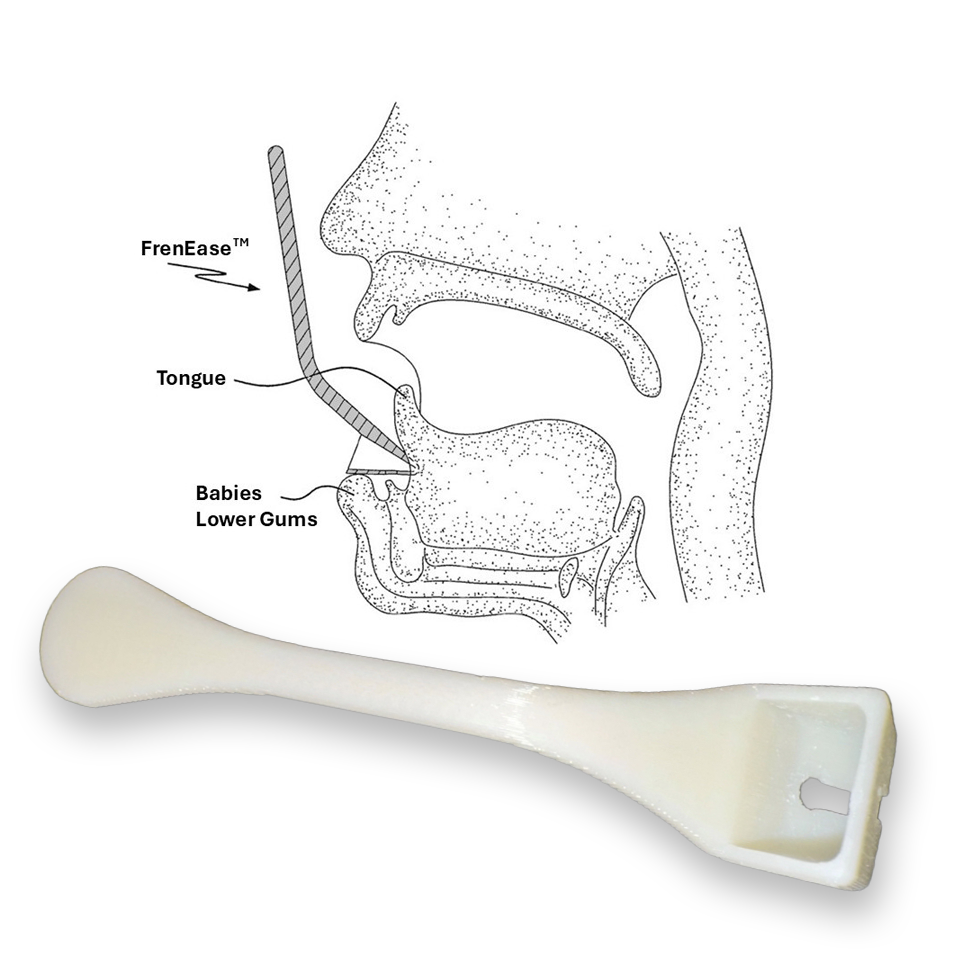
The Slot Retractor device was designed and is manufactured into in a pyramidal shape to act as a bite block. When inserted, the device immobilizes the tongue-tie while the handle is purposefully curved as to not obstruct the provider's view.
In a study of 200 infants, providers saw a 97% success rate.*
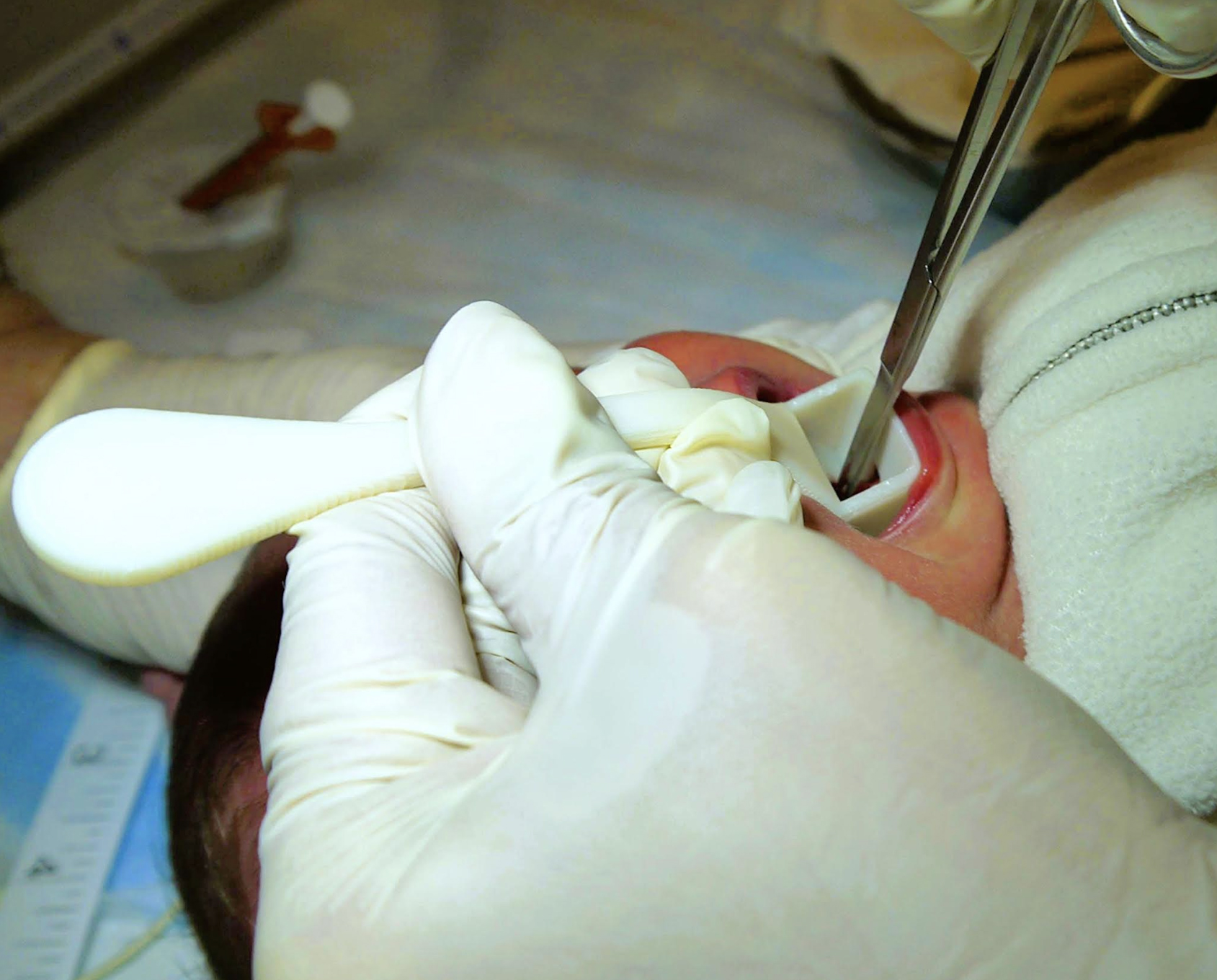
For more information, refer to instructions for use (IFU). If your medical facility is interested in participating in early access opportunities for testing, please contact us at info@encleantube.com.
Explore a step-by-step demonstration of the FrenEase™ Slot Retractor during a tongue-tie release (frenotomy) procedure. This video walks healthcare professionals through device placement, lingual frenulum visualization and stabilization, frenulum release, and post-procedure assessment.
FrenEase™ offers the provider an easier cutting technique with fewer adverse events, less partial division, and shorter procedure times.
Note that this video is for healthcare professional training purposes only. Refer to the FrenEase™ Instructions for Use (IFU) for complete directions, warnings, and precautions.
Under license from The Nemours Foundation. US Patent No. D751,197 S & 10,064,614 B2

We proudly support the Oley Foundation and encourage patients to learn more about their important resources and services.


